
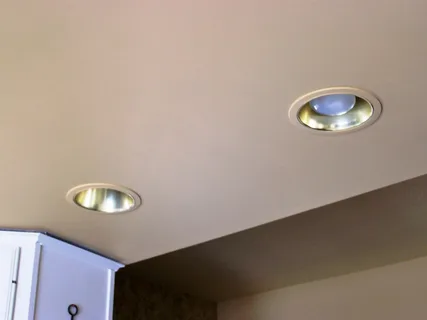
A light bulb’s electricity use depends mainly on its wattage and how long it stays on. A 60-watt incandescent bulb uses 0.06 kilowatt-hours (kWh) for every hour it operates, while a 10-watt LED uses only 0.01 kWh per hour. If an LED bulb runs for 5 hours a day, it uses about 1.5 kWh per month, while a 60-watt incandescent bulb used for the same amount of time consumes about 9 kWh per month. Your actual electricity cost depends on your local utility rate.
Lighting may seem like a small part of your home’s electricity consumption, but the number of bulbs you have, their wattage, and how often you use them can make a noticeable difference over time. Understanding how much electricity a light bulb uses can help you estimate energy costs and choose more efficient lighting for your home.
The first number to look at when determining electricity usage is the bulb’s wattage.
Wattage measures the rate at which an electrical device uses energy. A 60-watt bulb consumes electricity at a rate of 60 watts while operating. A 10-watt LED consumes electricity at a rate of 10 watts.
However, wattage alone does not tell you how much electricity the bulb uses over an entire day or month. You also need to know how long the bulb is turned on.
For example:
Because electricity bills are generally measured in kilowatt-hours, you can convert watt-hours to kilowatt-hours by dividing by 1,000.
Calculating a bulb’s electricity consumption is relatively simple.
Use this basic formula:
Watts × Hours Used ÷ 1,000 = Kilowatt-Hours (kWh)
For example, suppose you have a 60-watt incandescent bulb and use it for 5 hours every day.
60 × 5 = 300 watt-hours per day
300 ÷ 1,000 = 0.3 kWh per day
Over 30 days:
0.3 × 30 = 9 kWh per month
If your electricity rate were $0.20 per kWh, the estimated monthly cost would be:
9 × $0.20 = $1.80 per month
Your actual rate may be different depending on your utility company, location, electricity plan, taxes, and other charges.
A traditional 60-watt incandescent bulb uses 60 watts while operating.
If it runs for one hour, it consumes:
60 watts ÷ 1,000 = 0.06 kWh
If you operate it for 5 hours every day, it consumes:
0.06 × 5 = 0.3 kWh per day
Over 30 days, that becomes:
0.3 × 30 = 9 kWh per month
The cost depends on your electricity rate. At $0.20 per kWh, 9 kWh would cost approximately $1.80.
While that may not seem like much for one bulb, many homes have numerous lights. When multiple incandescent bulbs operate for several hours every day, their combined electricity consumption can become more significant.
LED bulbs generally require much less electricity than traditional incandescent bulbs to produce a similar amount of light.
For example, a modern LED may use around 8 to 10 watts to provide a similar amount of light that previously required a 60-watt incandescent bulb.
A 10-watt LED operating for 5 hours per day would use:
10 × 5 = 50 watt-hours per day
50 ÷ 1,000 = 0.05 kWh per day
Over 30 days:
0.05 × 30 = 1.5 kWh per month
At an electricity rate of $0.20 per kWh, that would cost about:
1.5 × $0.20 = $0.30 per month
This illustrates why LED lighting can be an effective way to reduce electricity consumption from lighting.
The difference becomes more noticeable when you compare bulbs with similar light output.
A traditional incandescent bulb may use approximately 60 watts to produce a certain amount of light, while an LED designed to provide comparable brightness may use roughly 8 to 10 watts.
That means the LED can produce similar illumination while consuming substantially less electricity.
Consider a bulb that operates for 5 hours every day:
Bulb Type | Example Wattage | Approx. Monthly Usage |
Incandescent | 60W | 9 kWh |
LED | 10W | 1.5 kWh |
LED | 8W | 1.2 kWh |
These figures are examples based on 5 hours of daily use over 30 days. Actual consumption depends on the specific bulb and usage pattern.
The cost of operating a bulb depends on three main factors:
A simple cost formula is:
Wattage × Hours Used ÷ 1,000 × Electricity Rate = Cost
For example, a 10-watt bulb used for 5 hours per day at $0.20 per kWh:
10 × 5 × 30 ÷ 1,000 = 1.5 kWh
1.5 × $0.20 = $0.30 per month
A 60-watt bulb used under the same conditions:
60 × 5 × 30 ÷ 1,000 = 9 kWh
9 × $0.20 = $1.80 per month
The difference for one bulb is relatively small, but if you replace multiple frequently used bulbs, the savings can accumulate.
A 100-watt bulb uses 0.1 kWh for every hour it operates.
If used for 5 hours a day:
0.1 × 5 = 0.5 kWh per day
Over 30 days:
0.5 × 30 = 15 kWh per month
At $0.20 per kWh:
15 × $0.20 = $3 per month
Again, this is an example rather than a universal electricity cost.
Leaving a light on continuously increases its electricity consumption because the bulb uses power for every hour it operates.
For example, a 60-watt bulb running for 24 hours consumes:
60 × 24 ÷ 1,000 = 1.44 kWh per day
Over 30 days:
1.44 × 30 = 43.2 kWh
At $0.20 per kWh, that would be approximately $8.64 for one bulb over 30 days.
A 10-watt LED operating continuously would use:
10 × 24 ÷ 1,000 = 0.24 kWh per day
Over 30 days:
0.24 × 30 = 7.2 kWh
At $0.20 per kWh, that equals approximately $1.44.
These calculations demonstrate why turning off unnecessary lights and using efficient bulbs can reduce lighting-related electricity consumption.
A compatible dimmer can reduce the power consumed by some lighting systems when the light output is reduced. However, the exact savings depend on the bulb, dimmer, and lighting technology.
Not every LED bulb works with every dimmer. If you want dimming functionality, choose bulbs specifically labeled as dimmable and make sure they are compatible with the installed control.
Modern dimmable LED bulbs can provide flexibility because you can adjust brightness based on the activity rather than always operating the light at maximum output.
Smart bulbs contain additional electronics that allow them to communicate with apps, hubs, Wi-Fi networks, or other smart-home systems.
Because of these electronics, smart bulbs can consume a small amount of electricity even when they appear to be turned off through the app but remain connected to power.
The standby consumption is generally small, but it is worth considering if you have many smart bulbs throughout the house.
Smart lighting can nevertheless provide useful energy-management features, such as scheduling, automation, remote control, and occupancy-based operation.
The appropriate wattage depends on the type of bulb and the amount of light you need.
With LEDs, wattage is no longer the best way to compare brightness. Instead, look at lumens, which indicate the amount of visible light produced.
For example, an LED using only a fraction of the power of an incandescent bulb can still provide comparable brightness.
When shopping for lighting, consider:
Choosing a bulb based only on wattage can be misleading, especially when comparing different lighting technologies.
Traditional incandescent bulbs generate light by heating a filament. A significant portion of the energy is released as heat rather than visible light.
LED technology produces light differently and can provide the same general level of illumination using substantially less electricity.
This is one reason energy-efficient lighting solutions have become common in residential and commercial buildings.
Lower electricity consumption can be especially useful in areas where lights are operated for many hours each day.
Replacing frequently used incandescent bulbs with efficient LEDs can reduce the electricity used for lighting.
The potential savings depend on:
For example, replacing ten 60-watt incandescent bulbs with ten 10-watt LEDs represents a significant reduction in operating wattage.
If all ten bulbs operate for five hours per day, the incandescent bulbs would consume approximately 90 kWh per month, compared with approximately 15 kWh for the LEDs.
At $0.20 per kWh, that example represents a difference of approximately $15 per month.
Your actual savings will vary according to your electricity rate and usage.
Changing bulbs is not the only way to reduce lighting-related energy use.
You can also:
One of the simplest ways to reduce electricity use is to switch off lights when they are not needed.
Open curtains and blinds during the day when practical. Natural daylight can reduce the need for artificial lighting.
Timers, occupancy sensors, and automated controls can prevent lights from staying on unnecessarily.
Using a bulb that provides significantly more light than necessary may result in unnecessary electricity consumption.
Dust and dirt can reduce the amount of light reaching the room. Keeping fixtures and shades clean can help maintain effective illumination.
If replacing every bulb at once is not practical, start with lights that operate for the longest periods. Kitchens, living rooms, exterior lights, hallways, and frequently used work areas may be good candidates.
Yes. Every operating electrical device contributes to your home’s total electricity consumption.
A single bulb may use relatively little electricity compared with major appliances such as air conditioners, electric water heaters, dryers, or ovens. However, multiple lights operating for long periods can add to overall household consumption.
This is why a residential electrical inspection can sometimes be useful when homeowners want to understand their home’s electrical system, especially during renovations or when adding new electrical loads.
Professional electrical services can also help identify outdated components, installation concerns, or opportunities to improve the functionality of a home’s electrical system.
When selecting a new bulb, don’t focus only on the purchase price. Consider the total operating cost and expected usage.
For frequently used fixtures, an efficient LED may provide a practical combination of low electricity consumption, long service life, and good illumination.
For decorative fixtures, accent lighting, outdoor areas, or specialty applications, the best choice may depend on the fixture and intended use.
Always make sure the bulb is compatible with the fixture. Check the fixture’s maximum wattage, bulb shape, base type, voltage requirements, and whether dimming is supported.
So, how much electricity does a light bulb use? The answer depends primarily on its wattage and how long it operates. A 60-watt incandescent bulb uses six times as much electricity per hour as a 10-watt bulb. When the same amount of light can be produced with a lower-wattage LED, switching to efficient lighting can significantly reduce electricity consumption over time.
The easiest way to estimate your own lighting costs is to multiply the bulb’s wattage by the number of hours it operates, divide by 1,000, and then multiply the result by your electricity rate.
Understanding these simple calculations makes it easier to manage household energy use. By choosing efficient bulbs, turning off unnecessary lights, using natural daylight, and installing appropriate controls, homeowners can make their lighting systems more efficient without sacrificing comfort or convenience.